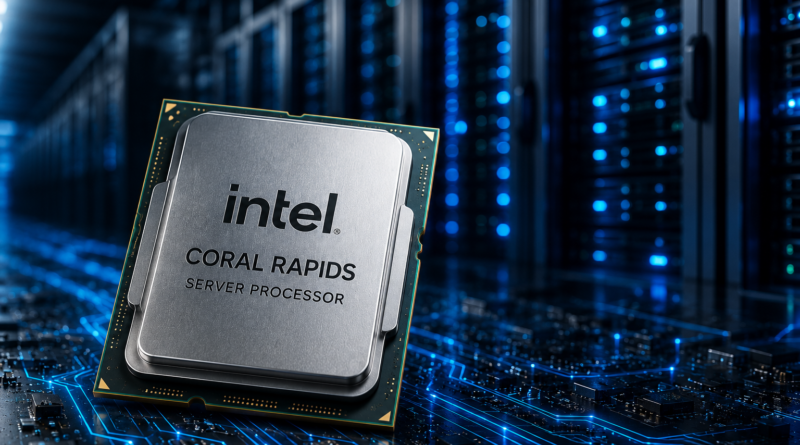
Intel To Bring Back Simultaneous Multi-Threading (SMT) Technology To Coral Rapids Server Processors
Credit: AI
Intel calls its implementation of “simultaneous multithreading” (SMT) technology Hyper-Threading. This refers to a method where a single core can combine the processing of two separate software threads, providing an overall performance boost in multithreaded tasks. Intel abandoned this feature with the release of the Core Ultra 200 processors, and the new Xeon 7 Diamond Rapids family will not support it either. This was apparently a mistake, because Intel CEO Lip-Bu Tan confirmed that Hyper-Threading will return with the Coral Rapids chips in 2028.
In the desktop segment, the trend toward reducing SMT is clearly evident: while it was retained on the performance cores in 12th-14th generation Core, Arrow Lake (Core Ultra 200) removed multithreading from the core lineup. Server solutions have a more flexible approach. For example, the current generation of Xeon 6 processors is a mixed bag: Granite Rapids uses SMT and scales up to 128 cores and 256 threads, while Clearwater Forest is built on energy-efficient cores without multithreading and offers up to 288 cores—but with a 1 core = 1 thread ratio. The plan going forward is as follows: Diamond Rapids (expected in 2027) will emphasize increasing the number of physical high-performance cores—configurations of up to 192 cores and 192 threads without SMT are planned. And in the next generation, Coral Rapids, multithreading will be reintroduced: this will allow for an increase in the number of software threads processed without a proportional increase in the number of physical cores.
The goal of this step is to increase throughput for typical server workloads: the second thread utilizes resources that would otherwise be idle. However, this isn’t the same as adding another physical core: the actual gain depends on many factors, from cache behavior and memory bandwidth to power consumption and application specifics.
At the same time, Intel hasn’t yet disclosed the key specifications of Coral Rapids: the number of cores and threads, clock rates, cache structure, memory configuration, and socket. It’s also unknown whether SMT will be available across the entire lineup or only in select models. It’s speculated that Coral Rapids compute modules will be manufactured using the 14A process technology—this coincides with the company’s plans to increase production volumes using this technology. However, this connection hasn’t been definitively confirmed, and the final product may contain a combination of dies manufactured using different process technologies.