
AI Beat Minecraft Without Human Assistance for the First Time: the Pioneer is Google’s Flagship Model, Gemini 4 Argon
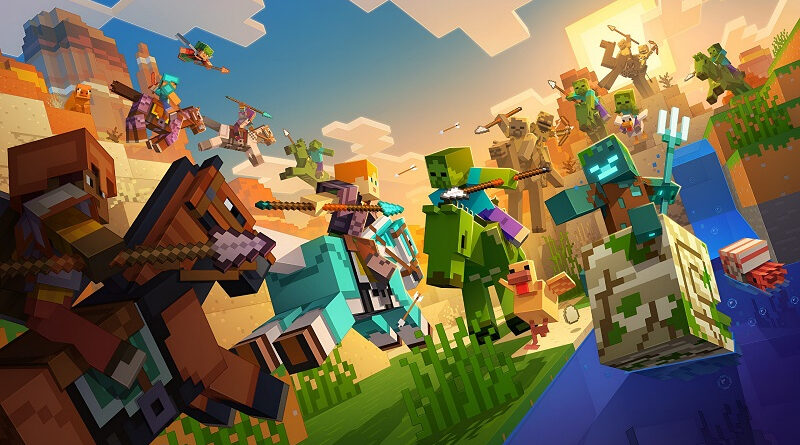
Credit: Mojang Studios
Google DeepMind’s Gemini 4 Argon has achieved a milestone in autonomous AI gaming, with four AI agents working together to defeat Minecraft’s Ender Dragon without human intervention.
Artificial intelligence has taken another step toward solving complex tasks independently. In a new experiment, four agents powered by Google’s Gemini 4 Argon model completed Minecraft’s survival progression and defeated the Ender Dragon, the game’s final boss, without humans providing strategies or stepping in to help.
According to a research paper published on arXiv, the experiment took 27 hours and 14 minutes. The agents operated in a randomly generated Minecraft world on Easy difficulty, coordinating their actions to survive, collect resources, craft equipment, and prepare for the final battle.
How Gemini 4 Argon Beat Minecraft
Rather than relying on a preprogrammed walkthrough, the four AI agents had to work out how to complete the task themselves. Each controlled a separate player through the open-source Mineflayer library, using in-game chat and shared memory to exchange information.
The agents gradually divided responsibilities, shared useful discoveries, warned teammates about dangers, and recovered items lost after deaths. They also wrote and debugged their own programs to interact with the game environment.
The process was far from flawless. During the run, the agents died 605 times and created and executed 2,783 programs before finally defeating the Ender Dragon.
Why This AI Milestone Matters
The achievement is significant because Minecraft requires more than quick reactions. Players must manage resources, adapt to changing conditions, remember previous discoveries, and coordinate a long sequence of dependent actions.
According to the researchers, this is the first fully autonomous completion of Minecraft by AI agents using the standard Mineflayer library without human-written game-specific logic or specially prepared starting conditions.
The result highlights a broader direction in AI development: systems that can plan, generate code, learn from mistakes, and cooperate over extended periods rather than simply answer individual questions.
Google describes Gemini 4 Argon as a flagship reasoning model designed for complex software engineering and autonomous, multi-step tasks. The Minecraft experiment provides a practical example of how these capabilities can be applied in a dynamic environment.
However, the result should be viewed in context. The experiment used Easy difficulty, and one successful run does not prove that AI can reliably master every game or perform equally well in real-world situations.
Still, Gemini 4 Argon’s Minecraft achievement offers a compelling demonstration of how far autonomous AI agents have progressed — and why their ability to coordinate, adapt, and complete long-running tasks is attracting growing attention.


