
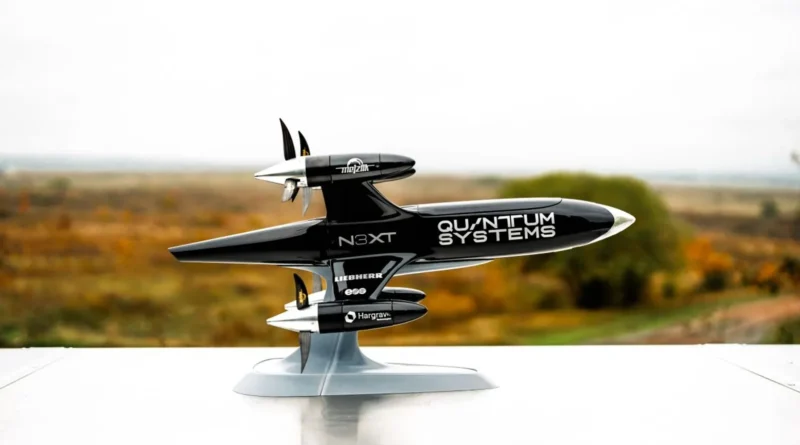
Apex Recordhunter Electric Drone Reaches 777 km/h
Credit: Quantum Systems
German technology company Quantum Systems has pushed the limits of electric drone performance. Its experimental Apex Recordhunter aircraft reportedly reached 777 km/h (483 mph) during a high-speed test, marking a significant milestone for battery-powered unmanned aviation.
The achievement was announced by the company’s leadership and represents a substantial improvement over the prototype’s previous reported speed of 699 km/h, recorded during testing in June 2026. However, the new result has not yet been officially certified as a world record.
Pushing the Limits of Electric Flight
The Apex Recordhunter was developed by N3XT, Quantum Systems’ experimental innovation team. The project focuses on exploring the limits of electric propulsion, aerodynamic efficiency and flight performance at extreme speeds.
Unlike conventional drones designed primarily for endurance or general-purpose operations, this experimental aircraft prioritises speed. Reaching 777 km/h demonstrates the potential of high-performance battery systems and specialised aircraft design in applications that demand rapid response times.
Why Speed Matters for Future Drones
The technology behind the Apex Recordhunter could contribute to the development of faster interceptor drones. These systems are designed to engage aerial threats that can move at considerably higher speeds than conventional multirotor drones.
Insights gained from high-speed testing can help engineers better understand propulsion performance, energy management and aircraft stability under demanding flight conditions. Quantum Systems is exploring how these findings could support its broader unmanned aviation programmes.
Is the 777 km/h Record Official?
Not yet. Under standard aviation record procedures, a speed attempt generally requires measured runs in opposite directions to account for wind effects. The reported 777 km/h flight completed only one leg of the attempt, leaving the result awaiting formal validation.
Despite this limitation, the test represents a notable development in electric drone technology. If independently verified under the applicable rules, the achievement could establish a new benchmark for battery-powered unmanned aircraft.
The bottom line: The Apex Recordhunter’s reported 777 km/h run highlights how rapidly electric drone technology is advancing, with potential implications for both aerospace engineering and next-generation interceptor systems.


