
SpaceX Explains Why Starship Booster Failed to Return to Launch Tower
Credit: SpaceX
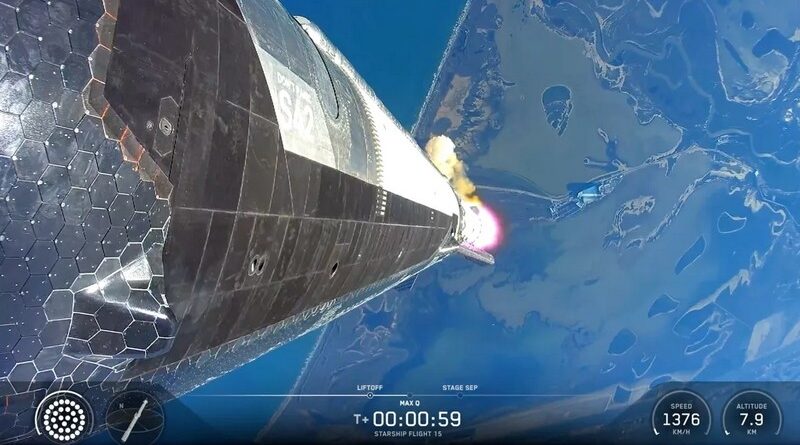
SpaceX has provided new details about why its Super Heavy booster failed to return to the launch tower during Starship Flight 15, ending its recovery attempt in an explosion over the Gulf of Mexico.
The November 13 test flight was supposed to achieve a major milestone: recovering both stages of the Starship rocket. However, while the upper-stage spacecraft continued its journey into orbit, the Super Heavy booster was forced to abandon its planned landing at Starbase in Texas.
According to SpaceX spokesperson Dan Huot, the booster’s guidance, navigation and control system automatically triggered an abort after detecting that the vehicle was not in the correct position to safely complete the tower catch.
Importantly, SpaceX clarified that the guidance system itself was not necessarily responsible for the original problem. Instead, it performed its intended safety function by preventing the booster from continuing with a potentially unsafe recovery attempt.
The booster subsequently changed course toward a designated offshore contingency area. Its flight termination system was activated, resulting in an explosion above the Gulf of Mexico approximately six and a half minutes after liftoff.
A possible fuel issue behind the failed recovery
During a November 14 update, SpaceX provided another important detail. Early indications suggested that the booster had ended its boostback burn earlier than planned because of a low fuel mass alarm.
The company stressed that the investigation was still ongoing, meaning the exact technical cause had not yet been established.
The booster had successfully launched with all 33 Raptor engines operating. However, one engine did not relight after stage separation, leaving 32 engines available for the boostback maneuver.
Engineers are now examining the flight data to understand why the booster did not reach the position required for a safe return to the launch tower.
Starship still achieved an important milestone
Despite losing the Super Heavy booster, Flight 15 was not a complete failure.
The Starship upper stage continued its mission, deployed 26 next-generation Starlink V3 satellites and completed its planned orbital journey.
More importantly, SpaceX successfully brought the upper-stage spacecraft back to its Texas launch site, where it was caught by the tower’s mechanical arms — a historic achievement for the Starship program.
The result demonstrates that SpaceX is making progress toward its long-term goal of developing a fully reusable orbital rocket system.
Recovering both stages remains a major engineering challenge. Nevertheless, the successful return of Starship’s upper stage shows that the company is getting closer to making rapid rocket reuse a reality.
For now, the investigation into the Super Heavy booster’s failed recovery continues, and its findings could help SpaceX improve the reliability of future Starship launches.


