
Eight Hours Non-Stop: Xiaomi Shows Humanoid Robots Hard at Work in Its Car Factory
Credit: Xiaomi
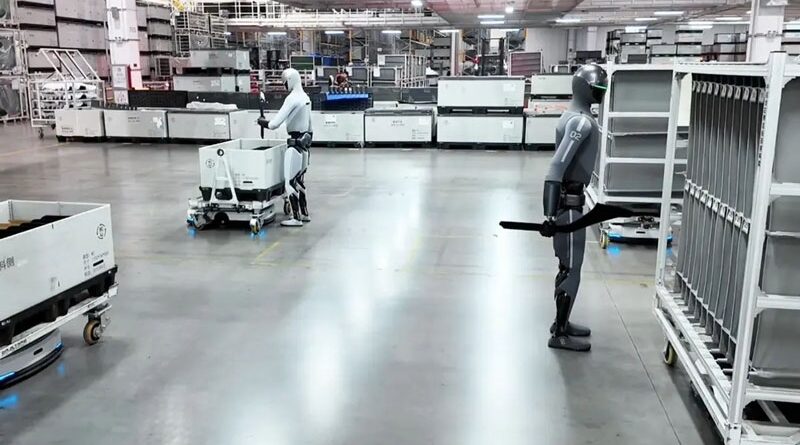
Xiaomi is taking another step towards the future of automated manufacturing. The Chinese technology company has revealed footage of its humanoid robots completing an eight-hour production task at its electric vehicle factory, demonstrating how AI-powered machines could become part of everyday industrial operations.
The robots were assigned to a sorting workstation responsible for handling centre console side covers used in Xiaomi vehicles. Their job involved picking components from containers, positioning them correctly and placing them into designated storage slots according to production requirements.
Humanoid Robots Move Beyond Factory Experiments
According to Xiaomi, the robots completed the full eight-hour task while operating autonomously. The company also claims they were capable of detecting and correcting operational anomalies without direct human intervention.
Another important achievement was their ability to coordinate with the factory’s production line control system, allowing them to work alongside existing manufacturing equipment.
The demonstration, shared by Xiaomi Tech on November 3, 2026, represents a significant development in the company’s ambitions to introduce humanoid robots into real manufacturing environments.
Why This Matters for the Automotive Industry
Automotive factories are among the most demanding environments for industrial automation. Robots must perform repetitive tasks accurately while maintaining strict production schedules.
Xiaomi has already been testing humanoid machines at its Beijing EV factory. Earlier trials included installing self-tapping nuts on vehicle production lines, with the company reporting a 90.2% success rate during a three-hour test in March 2026.
The latest demonstration expands those experiments to more complex material-handling operations.
Are Humanoid Robots Ready to Replace Factory Workers?
Despite the impressive results, important questions remain. Xiaomi has not published detailed figures for the latest test, including the total number of components handled, error rates or the number of human interventions required.
Nevertheless, the demonstration highlights the growing role of artificial intelligence and humanoid robotics in automotive manufacturing.
For Xiaomi, the goal is not simply to build smarter machines, but to develop robots capable of performing useful tasks in real industrial environments.
If the technology continues to improve, humanoid robots could eventually become a familiar sight on production lines around the world.


