The First Orbital Launch of SpaceX’s Starship Mega-Rocket Is Scheduled for September 22
Credit: SpaceX
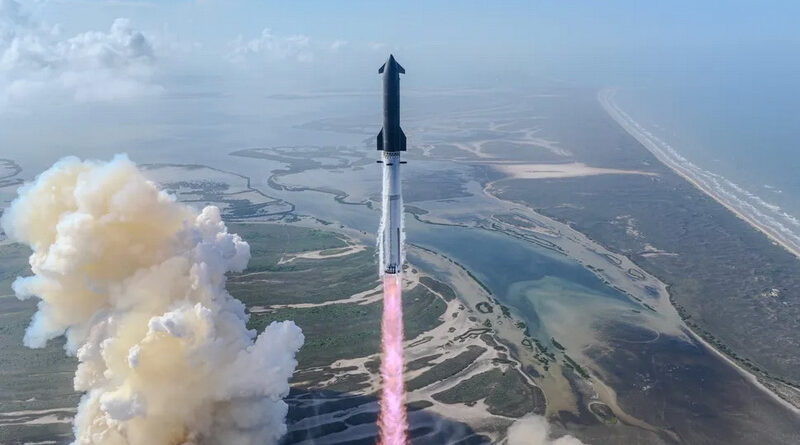
SpaceX has announced the scheduled date for the first orbital test flight of the Starship super-heavy rocket. The launch is planned for September 22, within a 75-minute window opening at 8:15 a.m. Eastern Time. The mega-rocket will lift off from the SpaceX Starbase spaceport in South Texas.
To date, all Starship tests have followed suborbital trajectories, allowing for reduced risk while validating new technologies. Flight 14 will be different: Starship will enter an orbit at an altitude of approximately 275 km, complete about six orbits around Earth, and spend nearly 10 hours in space.
Upon completion of the orbital mission, Starship will execute a deorbit burn, exit orbit, re-enter the atmosphere, and perform a controlled splashdown in the Pacific Ocean west of Chile. Before this maneuver, engineers must verify the full functionality of all critical systems and ensure sufficient fuel reserves for a safe return.
Another key objective will be the first deployment of full-scale Starlink V3 satellites. Starship is set to launch 26 of these next-generation satellites into orbit in a single mission. According to SpaceX, each satellite can add up to 1 Tbps of capacity to the network. The total capacity of a single mission is 26 Tbps—roughly ten times that of a Falcon 9 launch carrying Starlink V2 Mini satellites.
After separation, the satellites will autonomously deploy their solar panels and antennas, establish links with ground infrastructure and other spacecraft via radio and laser channels, and then use their own thrusters to ascend to their operational orbits. Once system checks are successfully completed, they will be able to begin serving users within just a few weeks.
The primary goal of the 14th Starship flight is to reach orbit. Other stages of the program have been deferred to the future. Among the most anticipated events are the capture of the spacecraft by the tower and in-orbit refueling—an operation essential for missions to the Moon, Mars, and beyond.