NASA’s Lucy Probe Starts Adjusting Its Cameras To Capture Images Of Jupiter’s Trojan Asteroids
Credit: NASA
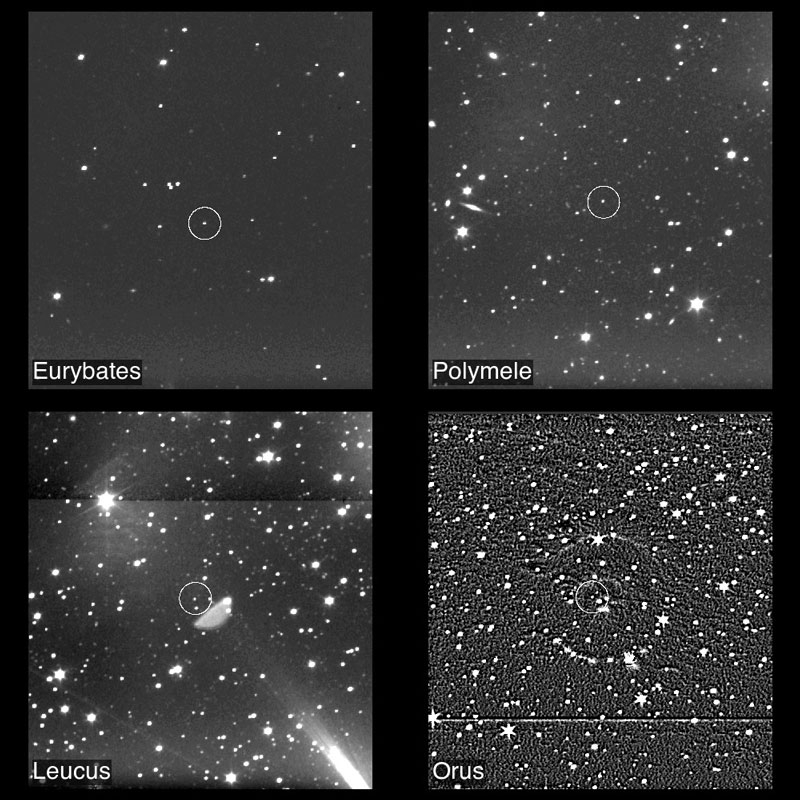
The first observations were made in the spring of 2026, and the team completed processing the images in July. This is especially important because Lucy will observe the asteroids under a completely different phase of illumination during future flybys. From Earth, Trojan asteroids are observed under almost full sunlight—similar to the full Moon. During the flybys, the spacecraft will pass between 480 and 960 km from the asteroids’ surfaces. Lucy will also see them at a significantly smaller phase angle, so part of the surface will be in shadow. This is precisely what must be taken into account to ensure the images are not too dark or overexposed.
Such checks allow the camera parameters to be calibrated, and optimal shutter speeds and image processing algorithms to be selected before the main scientific observations begin. Since each flyby will only last a few minutes, there will be no opportunity to repeat the imaging, so preparations are made well in advance.
The flybys will begin in August 2027 and continue until November 2028, with approach speeds reaching 16,000 mph.
This will be the first-ever study of a population of asteroids orbiting Jupiter in two large groups—the so-called Jupiter Trojan asteroids. Their composition and structure may preserve clues about the formation and early evolution of the Solar System. The Lucy probe itself was named after a prehistoric human ancestor whose remains were found in Africa. Thus, this mission is also a kind of “archaeology” of our Solar System.