NASA Calibrated Roman Telescope with Nanometer-Level Precision
Credit: NASA
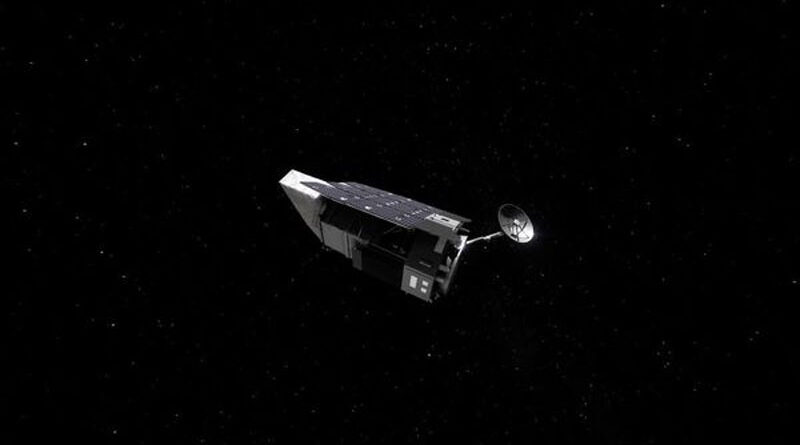
The Nancy Grace Roman Space Telescope has successfully completed a key calibration milestone a month and a half after its launch. NASA engineers finished a series of checks on its primary scientific instrument—the Wide Field Instrument (WFI)—and fine-tuned the focus of the optical system. The results exceeded expectations: the optical error proved to be significantly lower than the allowable limit, which means the telescope will be able to capture even sharper images of distant galaxies and other cosmic objects.
The WFI instrument is an infrared camera featuring an array of 18 detectors, with a total resolution of approximately 300 megapixels. During the verification process, specialists systematically tested the detectors and their control electronics, the optical filter-changing mechanism, the calibration system (equipped with adjustable LEDs), and the thermal control system. The optical filter wheel allows for the isolation of specific wavelength ranges and the decomposition of light into its spectral components. The calibration system is used to measure the response of the detectors at various light levels and to compensate for differences in their sensitivity.
Separately, engineers adjusted the telescope’s optical system, including the position of the secondary mirror, which directs light reflected from the primary mirror toward the sensors. According to the team, the mirror was shifted by approximately one-sixteenth the diameter of a human hair.
This is comparable to changing the height of a skyscraper by the thickness of a coin placed on its roof. For the WFI camera, the design tolerance for optical error was set at about 90 nm (root-mean-square, or RMS) deviation; following the adjustment, the measured value was 63 nm. This means that the actual optical error when imaging objects in the universe will be approximately 30% lower than the value specified in the original design.
Engineers also focused the camera of the observatory’s second instrument, the Coronagraph Instrument. The coronagraph will suppress starlight, enabling the direct observation of exoplanets. The setup for this instrument is not yet complete and will continue; specifically, the team will proceed with the calibration and adjustment of the deformable mirrors within the coronagraph’s optical system.
The spacecraft is currently continuing its commissioning phase. NASA expects to release the mission’s first scientific images in early 2027. Judging by the results of recent checks, preparations are proceeding successfully: the optics are performing better than expected, and the coronagraph is steadily nearing the demonstration of its primary capability—suppressing starlight.