NASA SLS Rocket Created Massive Ionosphere Disturbances, Raising GPS Concerns
Credit: NASA
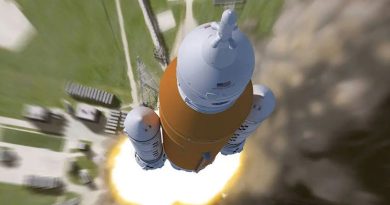
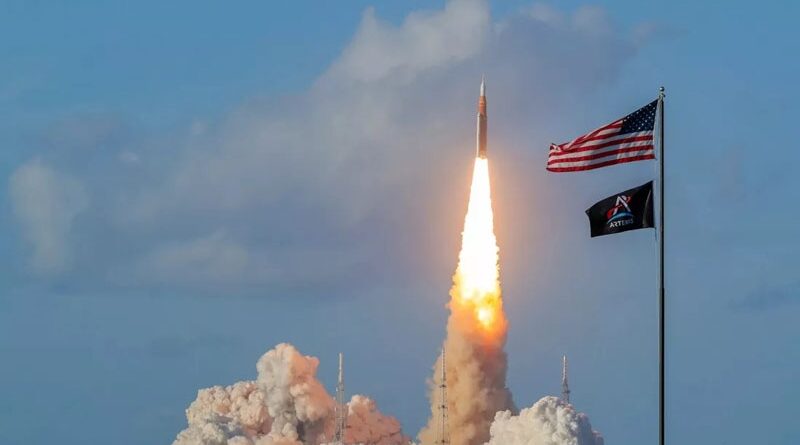
NASA’s powerful Space Launch System (SLS) rocket may have done more than send astronauts toward the Moon. A new scientific study suggests that the rocket’s historic Artemis II mission created enormous disturbances in Earth’s ionosphere, potentially affecting the accuracy of GPS navigation systems.
Researchers from Taiwan’s National Cheng Kung University analyzed data from high-precision GPS monitoring stations and discovered unusual changes in the concentration of charged particles in the upper atmosphere following the April 2026 launch.
Two massive disturbances stretched across North America
According to the researchers, the SLS rocket generated two major ionospheric disturbances, each extending approximately 5,000 kilometers across the United States.
The first was associated with the rocket’s main stage during liftoff. The second, more significant disturbance occurred after the spacecraft’s upper stage performed engine burns at an altitude of approximately 185 kilometers.
These events reduced the concentration of free electrons in parts of the ionosphere, creating what scientists describe as ionospheric holes.
Although the phenomenon is temporary, its scale was unusual. Researchers reported disturbances significantly stronger than those previously observed during SpaceX Starship test launches.
Why GPS signals could be affected
The ionosphere is an electrically charged region of Earth’s upper atmosphere that plays an important role in satellite communications and navigation.
GPS signals must pass through this layer before reaching receivers on the ground. Changes in electron density can alter signal propagation times, potentially producing positioning errors.
Researchers estimated that the disturbances associated with Artemis II could translate into GPS positioning inaccuracies of several meters in affected areas.
Such errors could become particularly concerning for autonomous vehicles, commercial drones and other technologies that depend on precise satellite navigation.
However, the study does not establish that widespread GPS outages or actual navigation-related accidents occurred during the mission.
A growing challenge for future space missions
The findings raise important questions about the environmental effects of increasingly powerful rocket launches.
As NASA, SpaceX and other aerospace companies prepare for more frequent lunar missions and eventually crewed journeys to Mars, rocket-induced atmospheric disturbances could become a more significant consideration.
Scientists will need to better understand how engine exhaust, launch trajectories and orbital maneuvers interact with Earth’s ionosphere.
For now, Artemis II has demonstrated that the effects of modern space exploration may extend beyond Earth’s atmosphere in ways that could influence technologies used every day on the ground.