Agility Robotics Introduces Digit 5 Robot
Credit: Agility Robotics
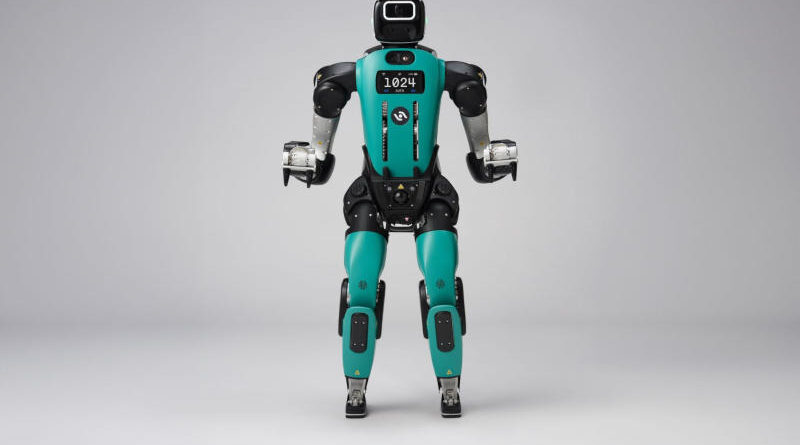
Agility Robotics has unveiled the Digit 5 humanoid robot, which has been trained in workplace safety and has learned to squat and yield the right of way when it sees a person.
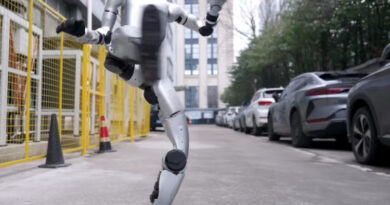
Upon detecting a person at a distance, Agility Digit 5 autonomously takes precautionary measures: it shifts aside to avoid a collision, pauses to let the person pass, or even crouches down if someone is in immediate proximity. The first customers will receive Digit 5 in the first half of 2027, with general market availability following by the end of that year. Agility is currently retooling its plant in Salem, Oregon, to set up production for the new humanoid robot model.
The company views safety as a key factor limiting the industrial adoption of humanoid robots; nevertheless, Agility’s robots were the first to enter continuous commercial operation, beginning work at a GXO warehouse in Atlanta in 2024. To date, they have logged over 65,000 hours of operation in warehouses and factories across North America. Companies such as GXO, Schaeffler, Amazon, and Toyota Motor Manufacturing Canada have either tested or deployed Digit robots.
In addition to its ability to operate safely alongside humans, Digit 5 features an advanced leg design that enables it to handle heavy lifting—managing loads of up to 22.7 kg. Standing 180.3 cm tall, the robot can reach objects at heights of up to 219.5 cm. Its battery lasts for 90 minutes of operation and takes just 9 minutes to fully charge, allowing Digit 5 to work for over 20 hours a day.
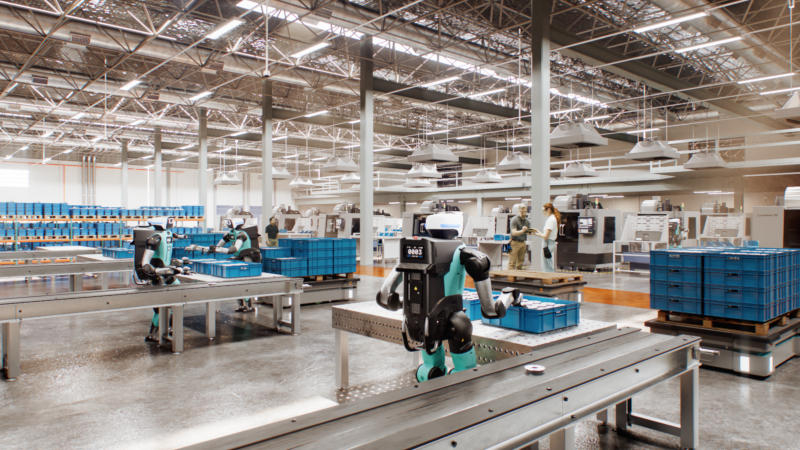
The robot’s design allows for the rapid swapping of end-effectors to perform various object-handling tasks, meaning it is no longer limited to simply moving cargo containers.
Company representatives emphasize that workplace safety was a top priority during the development of this new product. Previous generations of robots from other companies were involved in numerous incidents where the devices caused injuries to people. To mitigate such risks and comply with OSHA standards, the developers incorporated artificial intelligence algorithms and a comprehensive sensor system.