Optimus Lost A Third Of Its RAM
Credit: Tesla
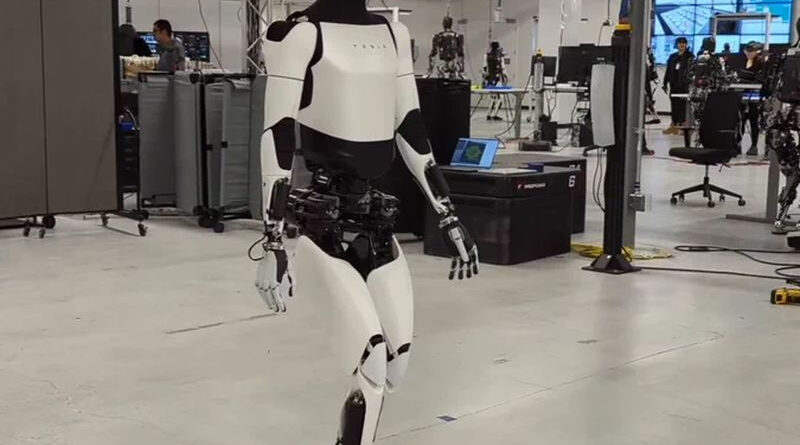
Elon Musk stated that Tesla has reduced the amount of RAM that will operate in conjunction with the upcoming AI5 and AI6 chips, which are designed for applications including the Optimus humanoid robots.
The shortage of memory chips amidst the AI boom is already affecting many market segments, though the humanoid robotics sector is not yet developed enough to feel a comparable impact. Nevertheless, late last week, Elon Musk stated that memory shortages and high costs had forced Tesla to revise the RAM specifications for its Optimus humanoid robots.
The Tesla CEO explained that when using the AI5 processor, the LPDDR5 capacity had to be cut in half to 72 GB, while for the AI6 processor, the LPDDR6 capacity had to be reduced by a third to 144 GB. Musk later clarified that for the AI5 chip, the decision was made to cut the LPDDR5 capacity less drastically—to 96 GB.
First of all, reducing memory capacity will enable Tesla to ramp up production of Optimus robots to the required levels. Secondly, it will also help lower production costs amidst high prices for memory chips.
“As it turns out, we believe this will have a negligible impact on Optimus performance, since memory bandwidth is a more significant limiting factor than total memory capacity (bandwidth remained constant),” noted Elon Musk.
The statement was made in response to a user’s estimate suggesting that a single humanoid robot would require around 200 GB of RAM. The user also compared the potential production of 10 billion robots against global DRAM output—approximately 45 billion GB per year. Musk had previously stated that, in the future, robots could outnumber humans.