
Scientists Discovered That Microbes From Earth Can Survive On The Moon
Credit: Pixabay
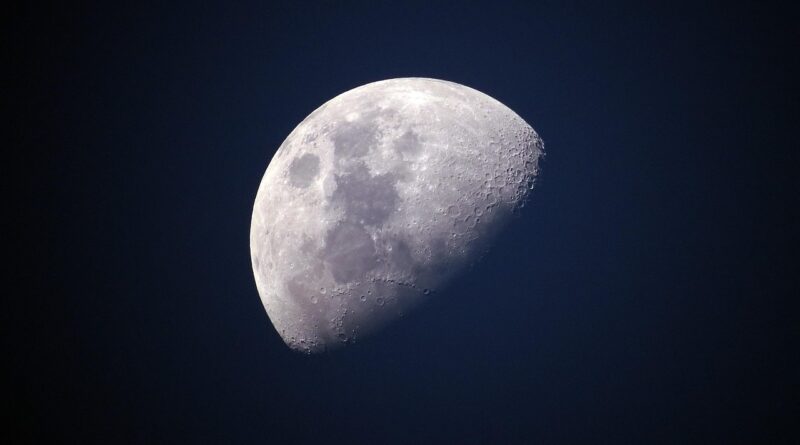
A study by NASA’s Goddard Space Flight Center shows that some terrestrial microorganisms can survive the harsh conditions of lunar craters. This poses a risk of biological contamination that could hinder the study of the primordial chemistry of the Moon and Mars.
Previous studies have shown that the lunar surface is too harsh for microbes to survive. Specifically, a 2019 study concluded that ultraviolet rays and solar heat are the main obstacles to microbial life on the lunar surface. However, this work did not consider that hills and valleys on the Moon could provide natural shelter for microbes. These could be especially important at the lunar poles, where the Sun never rises high above the horizon, creating permanently shadowed areas where ice, and perhaps other microbes, can accumulate.
In the new study, scientists analyzed three species of bacteria and two species of fungi. All are commonly found on human spaceflight missions and include microorganisms that, as previous studies have shown, are particularly resilient to the harsh conditions of space—vacuum, cold, and high-energy particles. Scientists compared previously collected data on the survival of these microbes with lunar maps that recorded ultraviolet radiation and temperature readings. They found that at both lunar poles, there are likely areas where microbes can survive, albeit in a state of suspended animation known as cryptobiosis. In this state, they are unable to move or grow unless more favorable conditions arise.
Scientists propose using the Moon’s South Pole as a natural laboratory to determine the true limits of Earth’s biology’s ability to survive in outer space before launching missions to other planets.


