Tesla Semi Trucks Receivs Smaller-Capacity Batteries Than Planned
Credit: Tesla
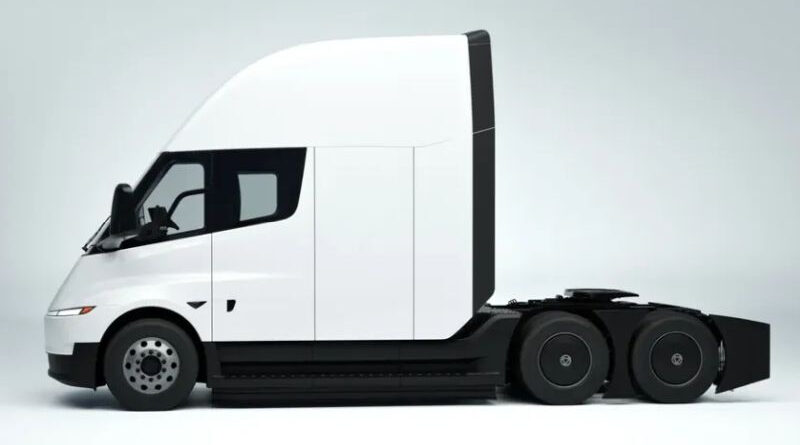
A new document from the California Air Resources Board (CARB) officially reveals key parameters of production versions of the Tesla Semi for the first time. Production Tesla Semis received batteries with a smaller capacity than originally promised.
Back in mid-April, the California Air Resources Board approved the battery capacity specifications for the Tesla Semi electric truck. Both versions of the long-haul truck are equipped with batteries based on NCMA 4680 cells, manufactured by Tesla itself. While the longer-range version has a battery with a capacity of 822 kWh, the shorter version has a battery with a capacity of 548 kWh.
According to a source, in December 2022, Elon Musk promised that the longer-range version of the Tesla Semi, with a range of 800 km, would be equipped with a battery with a capacity of approximately 900 kWh. At least, this figure was expected, given the vehicle’s ability to consume approximately 1.7 kWh of electricity per mile. In reality, the battery capacity turned out to be 10% smaller, although this did not affect the stated range. We emphasize that this truck can travel 800 km without recharging, even with a gross vehicle weight of over 37 tons. In March, the Tesla Semi underwent improvements in both aerodynamics and curb weight, shedding over 450 kg. This allows it to travel the stated distance without recharging, using a smaller-capacity traction battery.
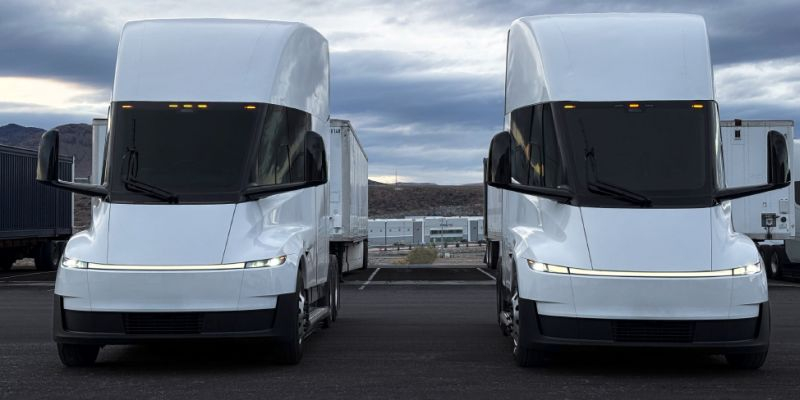
Incidentally, both versions of the truck are equipped with a three-motor power plant producing 1,072 hp, and the control system engages one of the rear axles, depending on the driving mode: the front one provides the necessary traction when starting off, accelerating, and driving uphill, while the rear one ensures more economical, even driving on the highway.
The 2026 Tesla Semi production model features significant improvements over the original, including a 450 kg weight reduction, improved aerodynamics, and support for the 1.2 MW Megacharger, which allows the car to restore 60% of its range in approximately 30 minutes during a mandatory driver rest break.