
Scientists Created Artificial Neurons
Credit: Northwestern University
Engineers at Northwestern University in the US have developed artificial neurons that can interact with living brain cells. The results of the study were published in the journal Nature Nanotechnology.
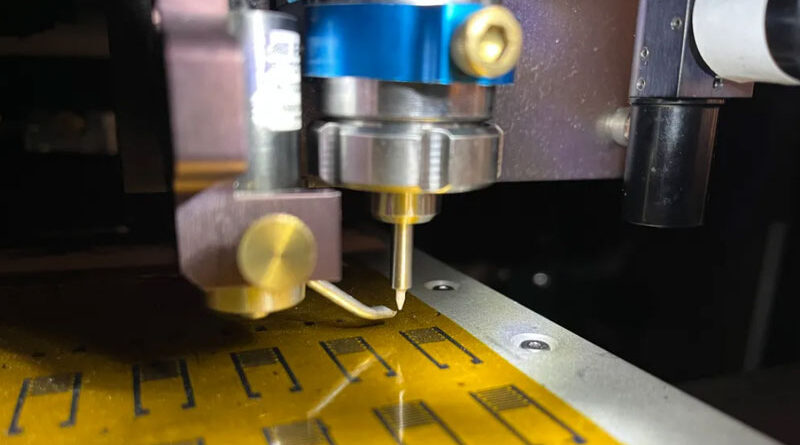
The basis of this interesting technology was an ink made of molybdenum disulfide and graphene nanoflakes. Using this ink, a pattern was applied to a flexible polymer substrate using a jet spray method, after which the substrate was exposed to an electrical current to partially decompose it. The key was preserving some of the polymer binder. This process led to the formation of thin conductive pathways—filaments, or threads. The printed elements could thus directly influence the shape and strength of the current flowing through them, which remarkably matched the spectrum of neural activity signals—from single spikes to bursts of impulses.
The coincidence of the activity of the artificial neural signals with natural ones was confirmed experimentally: when artificial neurons were connected to slices of mouse cerebellar tissue, the living cells responded to them as if they were their own, activating neural circuits. This was the first demonstration that printed neurons could generate signals of the correct shape and in the correct time range, without being too slow, like previous organic analogs, or too fast, like electronic ones.
The printing technology reduces waste by applying materials only where needed. The devices themselves are relatively inexpensive and easy to manufacture.
The authors believe that such neurons could form the basis for new neural interfaces, neuroprosthetics (for example, for restoring hearing, vision, or movement), and computing systems that operate on principles similar to those of the human brain.


