

The digital economy grows by 86% in two decades and now accounts for 25% of Catalonia’s GDP
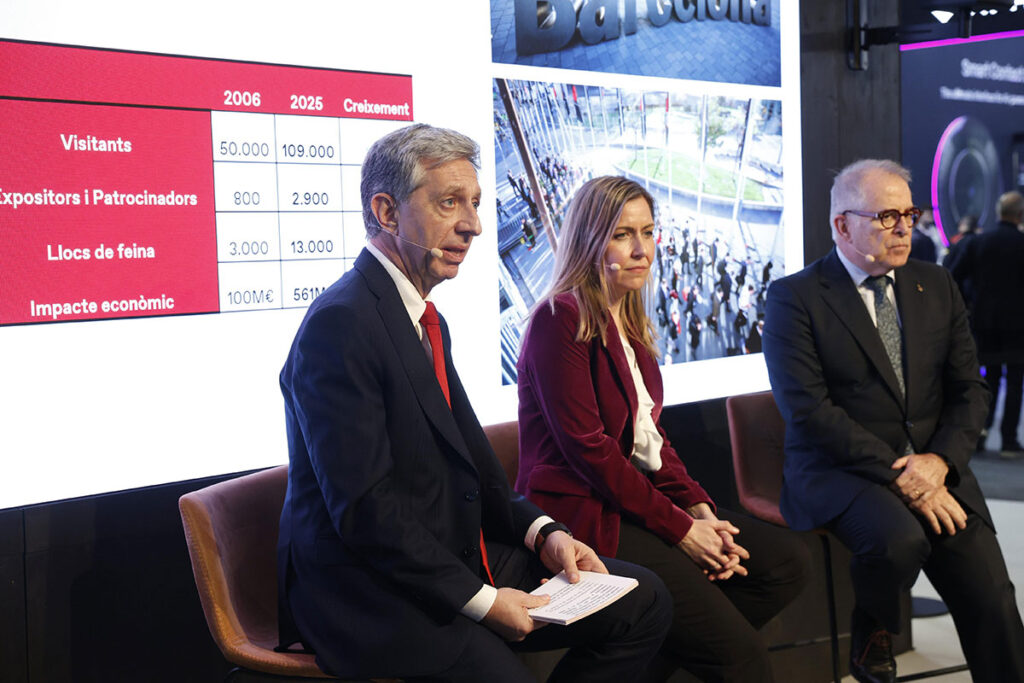
Mobile World Capital Barcelona (MWCapital) today presented at a press conference held during MWC26, the findings of the study “The Legacy of 20 Years of MWC: Two Decades of Digital Transformation”, which assesses the growing impact of technology on society and the economy since the congress was first hosted in Barcelona. The analysis highlights the development of the digital economy, which has grown by 86.4% in Catalonia over the past two decades.
The data dates back to 2006, when the digital economy accounted for 16.4% of Catalonia’s GDP. By 2024 – the latest available figure – this share had risen to 25.5%. In absolute terms, the digital economy now represents €68.8 billion, equivalent to a quarter of Catalonia’s total economic output.
At national level, the digital economy represented 14.2% of Spain’s GDP in 2006, increasing to 21.6% in 2024. This 81.2% growth places its current value at €305.8 billion.
The indicator, developed by MWCapital and COTEC, outlines for the first time the evolution of the digital economy over the past twenty years, through an analysis identifying digital capital and the productivity of digital labour across all sectors.
During the presentation of the study, the CEO of MWCapital, Francesc Fajula, stated: “Over these 20 years, we have experienced a technological revolution that has transformed every sphere of our lives. Today, it no longer makes sense to speak merely of a technology sector, but rather of a fully digitalised economy and society, in which technology is a cross-cutting and strategic element.”
From a pre-digital society to Barcelona’s capital of technology
In addition to analysing the evolution of the digital economy, the study revisits key indicators illustrating the growing impact of technology. The report recalls that in 2006 – the year MWC first arrived in the city under the name 3GSM World Congress – internet penetration among households and businesses in Spain stood at 39%. That same year marked a historic milestone, as mobile telephony surpassed fixed-line connections for the first time (84.3% penetration compared to 83.5%).
From a business perspective, at the beginning of the century only 44% of Spanish companies had internet access. In Catalonia, the emerging ICT sector accounted for 5.43% of GDP in 2007. Today, the digital economy represents 25% of Catalonia’s GDP, and the region – alongside Madrid and the Basque Country – leads national rankings in the adoption of new technologies and the creation of start-ups.
“We are celebrating these 20 years of MWC, during which the digital economy has grown by 86% in Catalonia and now represents 25% of Catalonia’s GDP, generating opportunities across all sectors of our economy,” highlighted the Secretary for Digital Policies of the Government of Catalonia, Maria Galindo. “These are 20 years of collaboration between the administrations of Barcelona, Catalonia, the Spanish State and the GSMA, involving a significant part of the sector, which have enabled us to jointly address the major challenges posed by digitalisation. And, above all, from a commitment to ethical and responsible digitalisation—an important reflection that AI is prompting today,” she concluded.
In his speech, the Deputy Mayor for Economy, Housing, Finance and Tourism of Barcelona City Council, Jordi Valls, underlined that “MWC is the result of a firm commitment to a public-private partnership model, which has made it possible to consolidate this project over twenty years.” “Its success has been possible thanks to the involvement and cooperation of all administrations, both the Government of Catalonia and Barcelona City Council, across successive governments of different political affiliations. Today, Barcelona is not only a leading economic, cultural and social hub: it is also a benchmark technology city. It is now up to us to collectively decide what transformation we want to drive in the coming years. The main challenge is to improve technology transfer, turning research and development into business opportunities”.
MWCapital: talent, technology transfer and ecosystem promotion to build a lasting legacy
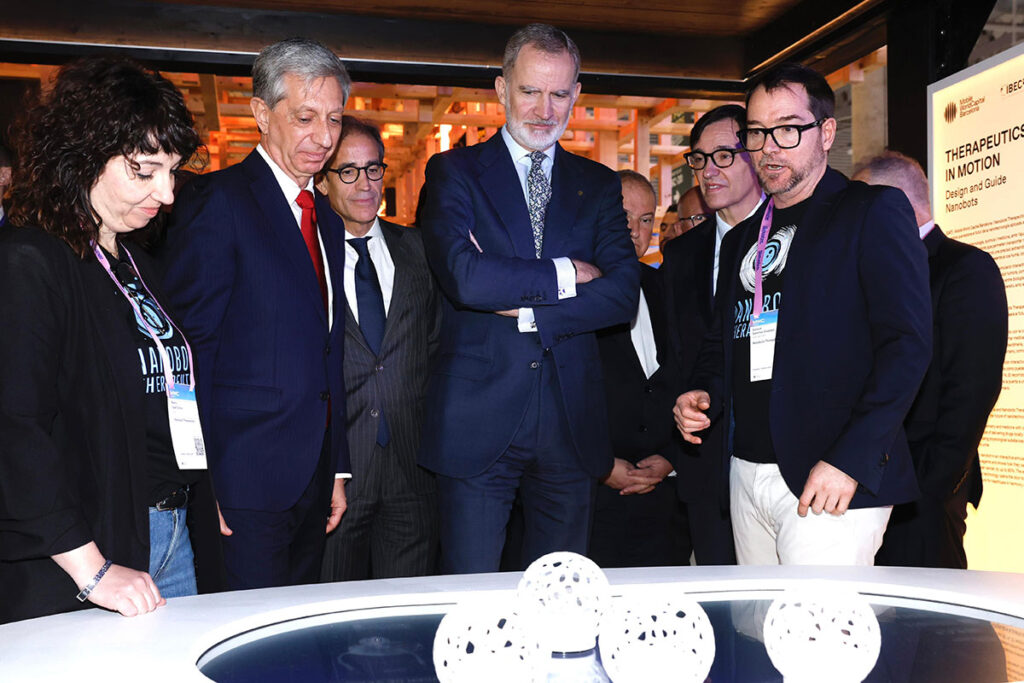
The MWCapital study also highlights the projects promoted by the Foundation to generate a year-round legacy linked to MWC. From a historical perspective, the report revisits initiatives such as the technological pilots launched under the 5G Barcelona programme, designed to test the potential of the network with a social impact focus, and Jump2Digital, the Foundation’s first initiative aimed at fostering digital talent locally.
Looking at the present, the report reviews indicators linked to some of MWCapital’s strategic pillars: talent, technology transfer and the promotion of the scientific and technological ecosystem.
In the field of talent, Barcelona currently has nearly 130,000 digital professionals, representing 6% of the city’s workforce and almost doubling over the past eight years. Digital talent is now the primary driver of employment opportunities in Barcelona. Within this context, since 2025 MWCapital has organised Talent Arena, the leading European event for developers, which this week brings together digital professionals, companies and academic institutions at Fira Montjuïc.
In the area of technology transfer, programmes such as The Collider have fostered the development of a rapidly expanding deep-tech spin-off ecosystem, now comprising nearly 1,007 companies emerging from universities and research centres. These companies generate an estimated combined turnover of €1.4 billion and develop cutting-edge technologies in strategic sectors such as biotechnology, energy and healthcare.
Finally, the promotion of the scientific and technological ecosystem is reflected in the growing attraction of international technology centres to Barcelona and Catalonia. In its latest Tech Hubs Overview report, MWCapital identifies 203 international tech hubs in Catalonia, primarily with parent companies based in the United States, China, Germany and the United Kingdom, employing more than 46,000 people. A clear indicator of Barcelona and Catalonia’s positioning as international technology capitals over the past 20 years – and of their attractiveness to global companies – is that in 2006 the region hosted just 14 tech hubs.


