
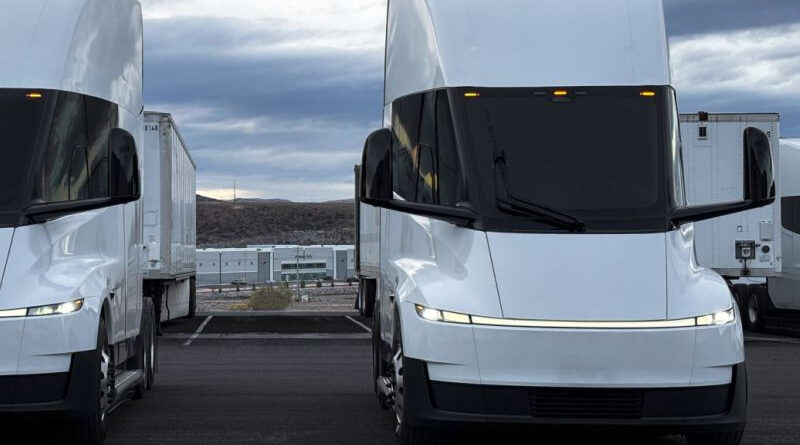
Tesla Semi Electric Trucks Get ‘Eternal’ Batteries
Credit: Tesla
Tesla unveiled the Semi electric truck several years ago, but mass production will only begin in Nevada after construction of a dedicated plant, which is well underway. Company representatives explained the improvements they’ve made to the Semi trucks as they prepare for mass production.
The truck’s aerodynamics have been improved: the drag coefficient has been reduced by 7% from the original 0.4, which was already better than that of the Bugatti Veyron. The entry-level Semi, with a range of 520 km (320 miles), has a shorter wheelbase and can now turn with a turning radius comparable to the Tesla Model 3 and Model Y.
Technically, the Semi shares components with the Cybertruck, including 4680-size batteries and a 48-volt system that reduces wiring weight and increases range. Unlike conventional refrigerated semi-trailers with diesel generators, the Tesla Semi can power trailers from its battery.
The steering retains the mechanical steering shaft but features electric power assistance, while the brakes remain hydraulic with electronic synchronization. An interesting feature is the independent use of the drive axles depending on the situation: when starting off and climbing hills, the front axle is used, while on the highway, the more energy-efficient rear axle is used.
The cabin now features fully retractable side windows, facilitating driver interaction with toll booths and other road infrastructure elements. The Nevada plant plans to produce up to 50,000 of these electric trucks per year.
According to a Tesla representative, the brand’s trucks can travel 1.6 million kilometers without replacing the traction battery. On average, transport companies estimate the expected service life of a single vehicle to be between 800,000 and 1.6 million kilometers, so the Semi meets this requirement. The truck is designed to charge at a high-power 1.2 MW station, which allows it to recover up to 60% of its charge in 30 minutes. This energy reserve is enough for approximately 480 kilometers of travel with a load. By early next year, 46 charging stations for Tesla trucks with a capacity of 1.2 MW each will be built across the country. Furthermore, in the future, the Semi may be equipped with inductive wireless charging, similar to Cybercab self-driving taxis.
Tesla plans to produce up to 50,000 electric Semi trucks per year at its Nevada facility.


