
NASA Tested World’s Most Powerful Electric Plasma Rocket Engine
Credit: NASA
At a NASA laboratory in California, engineers conducted the first U.S. test of a new type of electric propulsion system that could potentially be used for manned missions to Mars and deep-space missions throughout the Solar System. The prototype, a lithium-vapor electromagnetic propulsion system, was tested at the Jet Propulsion Laboratory (JPL) on February 24.
The engine’s activation marked the first time such a device has been fired in the United States in decades, simultaneously achieving record power levels. Powered by lithium metal vapor, the prototype engine achieved a peak power of 120 kW, far exceeding the capabilities of any electric rocket engine currently in the agency’s inventory.
The tested engine is a lithium magnetoplasmadynamic (MPD) accelerator—a technological concept that has been researched since the 1960s but has not previously been used in practice. Unlike conventional electric rocket engines, which use solar energy to accelerate the propellant (usually an inert gas such as xenon), the MPD engine uses ultra-high electric currents interacting with a magnetic field to electromagnetically accelerate plasma. These fields accelerate plasma from vaporized metal (lithium or other elements). Metal ions can acquire much greater energy than gas ions, providing significantly greater thrust.
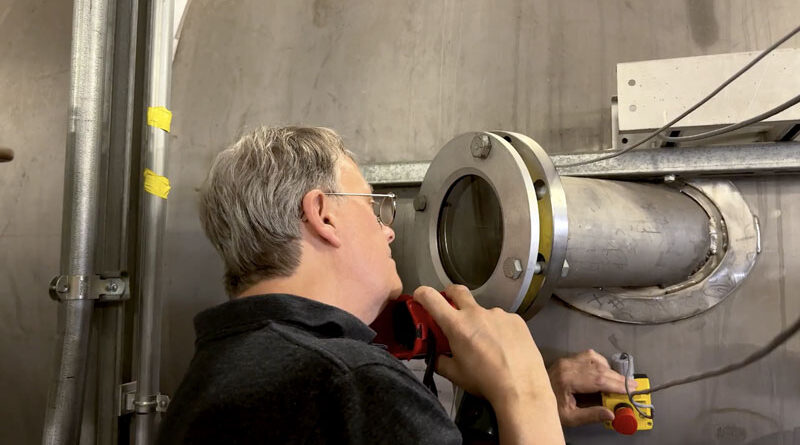
During a test of a prototype engine in JPL’s specialized vacuum facility, CoMeT, the engine’s tungsten electrode reached a temperature of over 2,800°C. Essentially, all preliminary tests of MPD engines are designed to prove that the propulsion system components won’t simply melt. In the conditions of space, they will have to operate continuously for tens of thousands of hours in a rocket, which will require careful selection of materials for the manufacture of such engines.
The transition to such engines is exciting because of their efficiency: electric propulsion can consume up to 90% less fuel than chemical rockets, although it provides less instantaneous thrust. However, in space, it is precisely sustained acceleration that allows for achieving enormous speeds.


