NASA Unveils Pegasus: New Rover Designed To Explore The Moon
Credit: Lunar Outpost
The US National Aeronautics and Space Administration (NASA) is seeking to build a permanent settlement near the Moon’s south pole. The base is expected to cover “hundreds of square miles,” making mobility key to the project. This week, NASA unveiled Pegasus, one of two rovers that will be deployed directly to the surface of the moon to ensure mobility.
The Pegasus is a “sporty,” smaller version of the Eagle LTV, whose design is in turn inspired by GM’s Hummer EV. Lunar Outpost is developing this buggy in collaboration with GM, Goodyear, and Leidos.
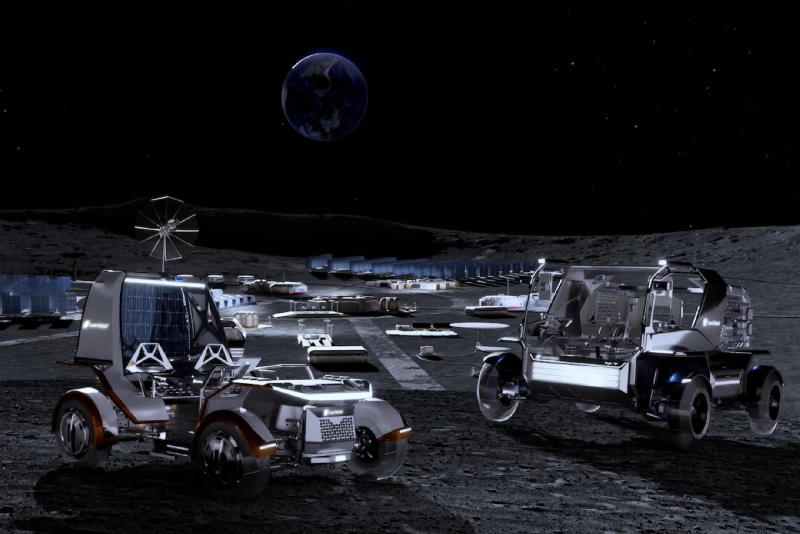
The Pegasus builds on decades of flight experience gained during Explorer-class rover missions, previous missions, and extensive autonomy and mobility testing: “This foundation allowed us to quickly adapt to NASA’s updated requirements for long-range vehicles.”
The result far exceeds the capabilities of the Apollo-era lunar rovers. According to Lunar Outpost, Pegasus and Eagle can operate for at least a year and travel 100 times the distance of the Apollo rovers, which traveled a combined 56.2 miles (90.4 km) over three missions—Apollo 15, Apollo 16, and Apollo 17.
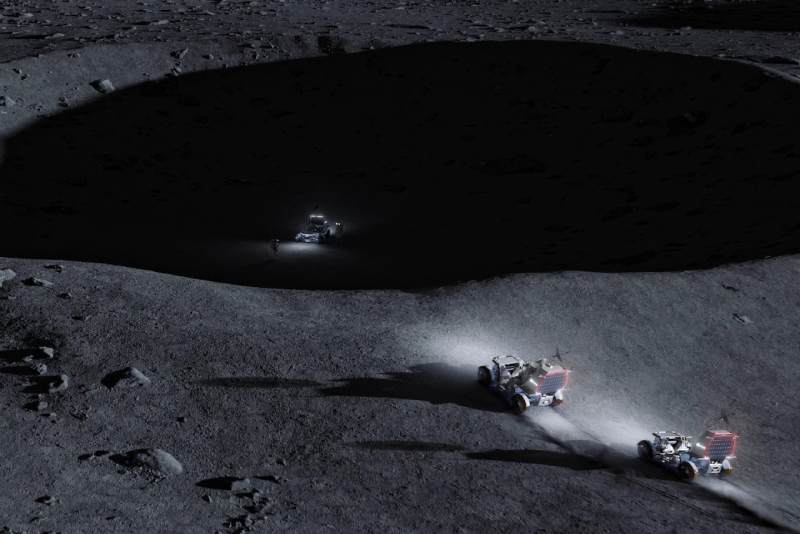
The project is being developed under a NASA contract for lunar vehicle development: Lunar Outpost received approximately $220 million, while its competitor, Astrolab, received $219 million.
NASA requires Lunar Outpost to deliver a fully operational Pegasus rover by November 2027. Barring any complications, Blue Origin’s Blue Moon Mark 1 lander will be able to deliver the rover to the moon’s surface.