
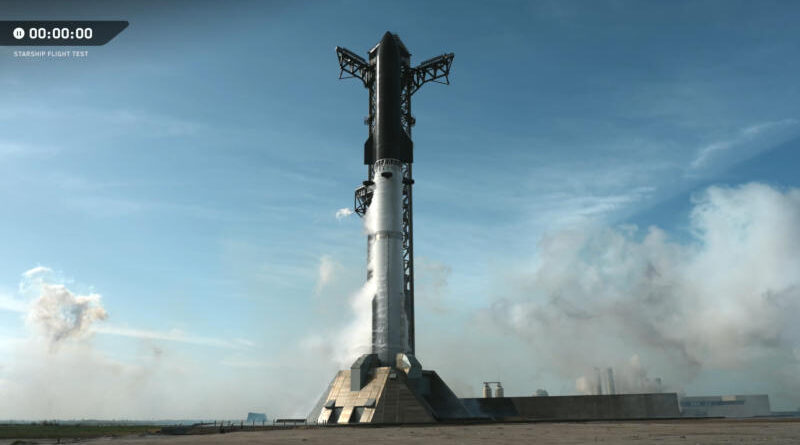
Four Engine Failures Abort Starship’s 13th Launch At The Last Second
Credit: SpaceX
SpaceX canceled the 13th test flight of the Starship rocket after some of the engines failed to start.
“We’ll take some time to understand the reason for the mission abort after the initial engine burn and then determine our next steps,” said SpaceX spokesman Dan Huot during a webcast. In fact, the company quickly identified the cause of the failure and fixed it. “To ensure a successful flight, two Raptor engines will be removed and replaced.
The most likely launch time is early next week,” SpaceX CEO Elon Musk subsequently wrote on social media.
The Starship rocket was scheduled to lift off on its 13th test flight from the Starbase launch site in South Texas on July 16 at 6:45 PM ET (July 17 at 1:45 AM Moscow time), at the very beginning of the 90-minute launch window. This is the second flight of the Starship Version 3 (V3) variant. The first launch of Starship V3, its 12th test flight, took place on May 22. It was mostly successful, but some issues arose. Specifically, the Super Heavy first stage failed to return to its initial position for a controlled landing in the Gulf of Mexico, and Starship’s upper stage failed to ignite one of its Raptor engines in space.
On board were 20 of SpaceX’s newest and most advanced Starlink satellites, scheduled to be launched into orbit during a one-hour flight from Starbase, the company’s base near the Texas-Mexico border.
These internet satellites were intended to attempt to contact Starlink satellites already in orbit and simultaneously capture images of Starship’s heat shield.


