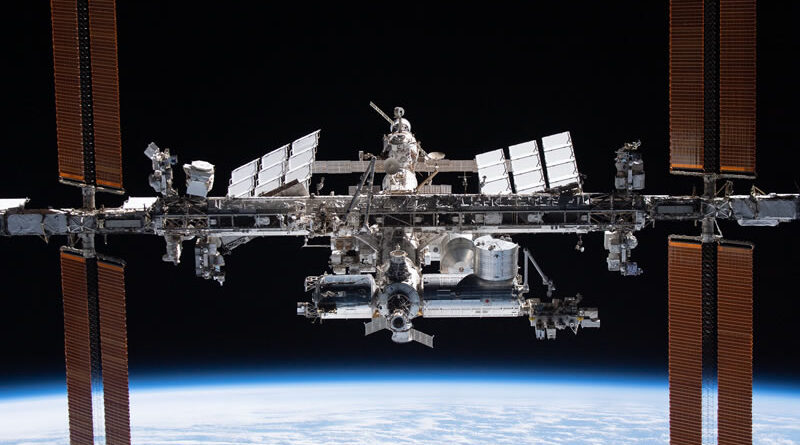
NASA Looking For Companies To Build A New Generation Of Orbital Stations
Credit: NASA
NASA has published a draft request for proposals (RFP) allowing American companies to submit their ideas for creating next-generation commercial orbital stations. The initiative aims to prepare the transition from the ISS to private platforms that will assume some of the scientific and technological tasks in low Earth orbit.
The published project calls for an open competition with several fundamental contract types: Firm-Fixed-Price (FFP) and Indefinite-Delivery/Indefinite-Quantity (IDIQ). Under the program, NASA intends to select two or more contractors to develop, certify, and test the stations, after which the agency will conduct an additional selection process for the final phase of construction and provision of orbital services, Ars Technica reports.
According to published materials, potential participants must submit comments on the draft document by July 27. NASA also held an informational briefing at the Johnson Space Center on the upcoming competition’s requirements and the planned procurement process.
The document was released after months of delays, which caused uncertainty among companies developing commercial space stations, including Axiom Space, Blue Origin, Vast, and Voyager. The second phase of the program was expected a year or two ago, but its launch was repeatedly delayed due to funding uncertainty from the US Congress and a review of the program’s implementation approaches within the agency.
Despite the relief generated by the publication of the draft RFP, industry representatives greeted the document with some caution. According to Ars Technica, some companies were surprised by the scale of the requirements: the draft contains over 3,000 technical and organizational requirements, while market participants had expected only a few hundred, allowing more freedom in station design. In particular, Phil McAlister, former head of NASA’s Commercial Space Station Program, noted that the document’s scope of requirements more closely resembles a traditional cost-plus contract, although it formally envisions fixed-price contracts. He believes this approach could prove overly burdensome for companies unless the agency increases funding for the program.
NASA expects to award fixed-price contracts with long-term service delivery terms. This approach should reduce risks for the agency while simultaneously enabling companies to attract additional private investment to develop their own space platforms.