
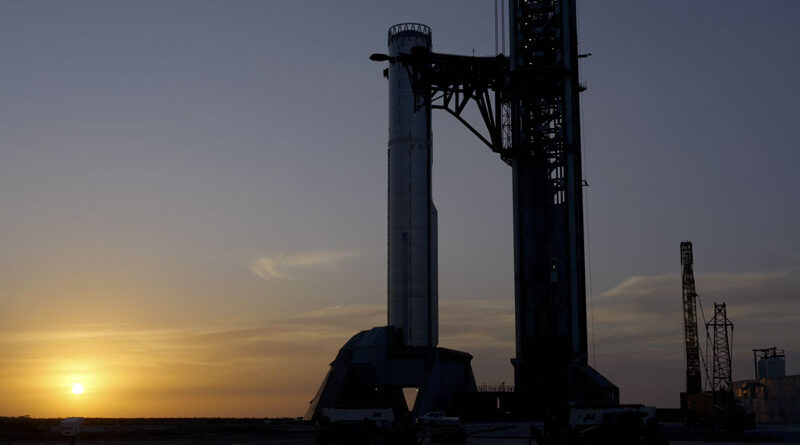
SpaceX Conducted Its First Test Fire Of The Latest Version Of Its ‘Super Heavy’ Booster
Credit: SpaceX
SpaceX conducted a hot fire test of its next-generation Super Heavy booster (Booster 19), but the engine burn was very short and may have been aborted early, according to NASASpaceflight observers monitoring the test.
It’s safe to say this was a historic event. Firstly, tests were conducted for the first time at the cosmodrome’s new launch pad, which will double the launch frequency from this base. Secondly, the new, more powerful Raptor 3 rocket engines were tested for the first time in a large cluster of 10 engines as part of a single stage. Thirdly, a new version of the Super Heavy booster was tested.
Incidentally, tests of the second stage—the Starship V3 spacecraft itself—were also successfully completed ten days earlier. This gives hope that the new version of the rocket system will be able to conduct a test flight in early April. NASA is pushing SpaceX: the Starship V3 system is essential for returning Americans to the Moon. With its new engines, it is capable of delivering the necessary payload not only to the Moon but also to Mars. Unlike the second version of the system, the new one is capable of lifting up to 100 tons of cargo to low Earth orbit, compared to 35 tons for the previous version.
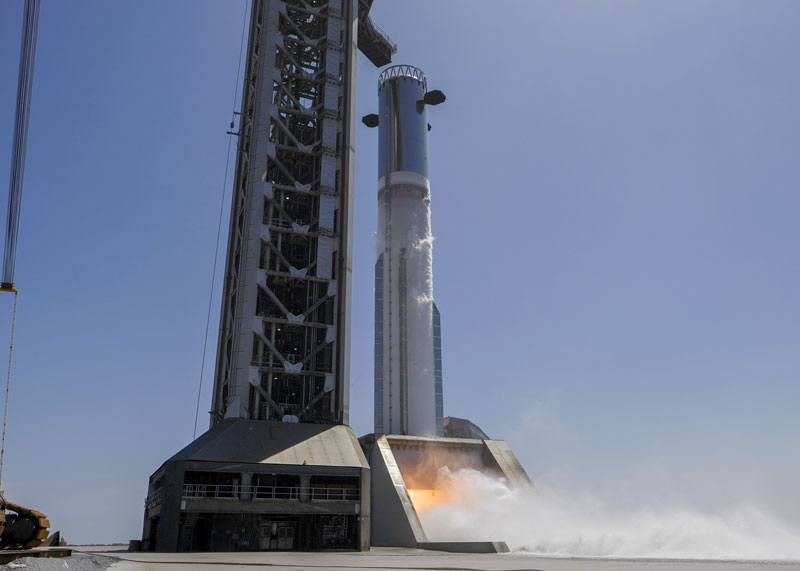
Now specialists will analyze the test results. They will also need to wait to learn the reasons for the early termination of the hot fire test.
Earlier, the SpaceX Super Heavy booster (Booster 19, the first of a new generation of boosters) was lifted back onto the Pad 2 launch pad after a technical checkout.


